This week, we’re talking tariffs, trade, and the quiet tectonic shift reshaping supply chains.
Thursday’s announcement of sweeping U.S. tariffs might sound like just another headline, but it could be the start of something bigger. Behind the numbers (10%, 20%, 54%) is a strategic reordering of global trade that might redefine how goods move, and who they move with.
Meanwhile, CPG’s M&A engine kicked into high gear. Hershey just bought LesserEvil. Castillo Hermanos scooped up SunnyD’s parent company. And Calypso made a sharp play with one of the most promising hydration brands out there: Mela.
Let’s get into it.
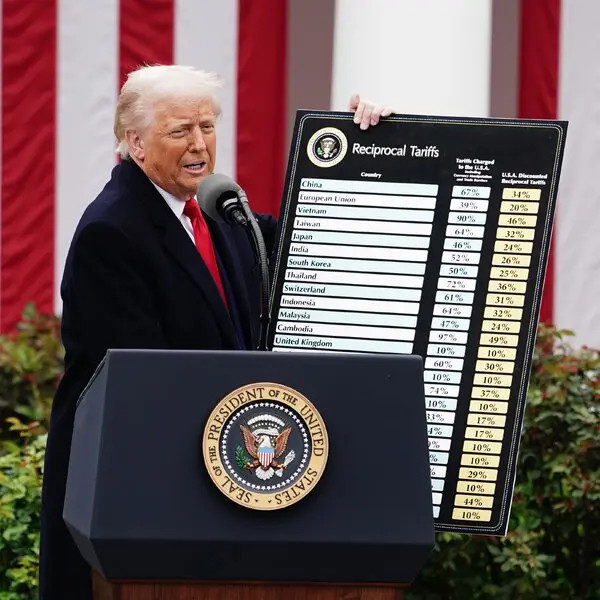
Photo Credit: The New York Times
Tariff Thursday Might Be the Beginning of Something Bigger
There’s a thing that happens when history turns. At first, it doesn’t feel like a turning point, it feels like a strange week.
That’s what this one is. A strange week, but maybe not a small one.
This Thursday, the U.S. announced sweeping tariffs:
- A 10% baseline on nearly all imports
- 20% on EU.
- Up to 54% for countries like China and Vietnam (which I did not expect).
And in a somewhat rare moment of strategic clarity, Trump’s new economic team isn’t hiding the goal. Treasury Secretary Scott Bessent and economic advisor Steven Miran have said, clearly and publicly, that this is step one in an intentional restructuring of global trade – a “third great reordering” after Bretton Woods (1944) and the rise of neoliberalism (1980).
If you follow trade policy, this is a moment. If you don’t, it may still become one, just slower, more sideways.
The idea behind this plan is simple, at least on the surface: Break the old system.
Force reciprocity.
Redraw the global map into three buckets:
Green countries: low tariffs, military protection, and access to U.S. markets and the dollar system.
Yellow countries: To be determined.
Red countries: good luck.
The details will evolve. Some of it may be posturing. But the underlying mindset is consistent: the U.S. built a global trading system in the 20th century that no longer serves its domestic interests. This new one is about leverage and the use of tariffs not just to punish, but to negotiate. Tariffs, in this world, are less about taxes and more about tools. And they’re being used.
So what does that mean for food and beverage?
It means we’re in a new phase. One where the supply chain optimizations of the past 10 years, which built on price efficiency and stable trade routes, are going to start breaking down. Not dramatically. But quietly, and then all at once.
When a 46% tariff hits Vietnamese coffee, it doesn’t just affect beans.
It affects milk, sugar, tea, ceramic mugs, and distribution centers.
Same for packaging materials.
Same for contract manufacturers sourcing specialty ingredients.
The butterfly effect doesn’t always feel like chaos. It just makes everything feel slightly more expensive, slightly more delayed, and slightly more out of your control.
That’s why, at Chapter Foods, we didn’t try to predict this moment. We just assumed a moment like it would come.
We’ve always believed the edge wasn’t just in finding great suppliers or manufacturers, it was in building dynamic optionality into the model. The ability to shift. To respond. To move production where it makes the most sense as things evolve.
Today, that means having manufacturing and ingredient partners across both the U.S. and Turkey. Two countries still sitting in the “green” bucket, and strategically aligned in a world that’s splitting into spheres.
It also means working with brands and retailers who are already asking what this world might look like a year from now. And planning accordingly.
No one can predict exactly what happens next. But this is one of those moments where it’s probably better to overreact a little now than scramble later.
We’re not here to make calls on geopolitics.
But we are here to help teams keep building, even in shifting terrain.
If you’re rethinking your sourcing, hedging against volatility, or just looking to get smarter on how to move, we’re already working with teams who are doing the same.
Big M&A Energy: Three Bold Moves That Might Reshape the Middle of the Shelf
There’s been a lot of chatter around billion-dollar buys lately. Three separate deals landed across CPG in the same day, and they all point to the same thing: the battle for the shelf space is heating up.
1. Hershey Buys LesserEvil: $750M for Purpose + Popcorn
LesserEvil started with Himalayan popcorn and a brand story built around mindfulness, better oils, and clean ingredients–basically, a Whole Foods aisle vibe with a DTC edge. Now it’s joining the Hershey family alongside Pirate’s Booty and SkinnyPop, in a deal reportedly worth $750 million.
It’s not hard to guess why. LesserEvil brings built-in better-for-you credentials, manufacturing capacity, and a smart shelf presence. And while the chocolate industry’s battling volatility (cough, cocoa prices), Hershey’s clearly trying to build insulation in salty snacks and functional formats.
2. SunnyD, Meet Guatemala: Harvest Hill Gets Acquired
In a deal pegged around $1.5 billion, Harvest Hill, the makers of SunnyD, Juicy Juice, and a bunch of other lunchbox legends, is being acquired by Guatemalan powerhouse Castillo Hermanos.
On paper, it looks like a traditional portfolio expansion. But dig deeper and you’ll see Castillo’s long game: they’re stepping into U.S. beverage territory with infrastructure already in place (six production plants, deep DSD reach), a bunch of nostalgic brands that still sell, and just enough firepower to maybe bring their own brands like Del Frutal stateside.
And don’t forget: SunnyD recently dipped into alcoholic RTDs with vodka seltzers. There’s momentum here, and Castillo clearly wants in.
3. Calypso Buys Mela: DSD Muscle Meets Watermelon Vibes
Calypso, the lemonade brand with wild flavors and retro glass bottles, just made its first acquisition: Mela, the Miami-based watermelon water brand that’s been quietly building something special.
And honestly, Mela might be one of the smartest beverage concepts I’ve seen in a while.
The brand’s grown over 87% in the last year, pulling in $6.6 million in sales across grocery, c-store, mass, and online with just four SKUs. All of them are 100% watermelon water. No filler, no buzzword stacking. Just a clean product done right.
They’re already in 10,000+ doors, from 7-Eleven to QuikTrip. But now with Calypso’s national DSD network behind them, Mela’s reach is about to jump a few weight classes.
Calypso isclearly building something bigger. This move feels like the start of a broader play. Keep an eye on this one.
Note: If you haven’t yet, you should check out this video.
Podcast of the Week: Hidden Brain – Did I Really Do That?
I know, it sounds wild. Why would anyone confess to something they didn’t do? But this episode will make you rethink everything you thought you knew about self-interest and memory.
Psychologist Saul Kassin breaks down how people —smart, well-meaning people— can get pushed into false confessions through isolation, pressure, and trust in authority.
It starts with a kid getting accused of plagiarizing a book report. It ends with the Central Park Five. Heavy stuff, but honestly, fascinating.
That’s it for this week.
If you’re thinking about how to move smarter in this new terrain, or just want to bounce around an idea, my inbox is open.
And if you’re looking for the right co-manufacturer or supplier to help you build what’s next, Chapter Foods is here. We connect brands and retailers with the right partners: fast, reliable, and ready.
Until next time, stay focused and keep moving.
Can Koyuncu, Co-Founder & CMO