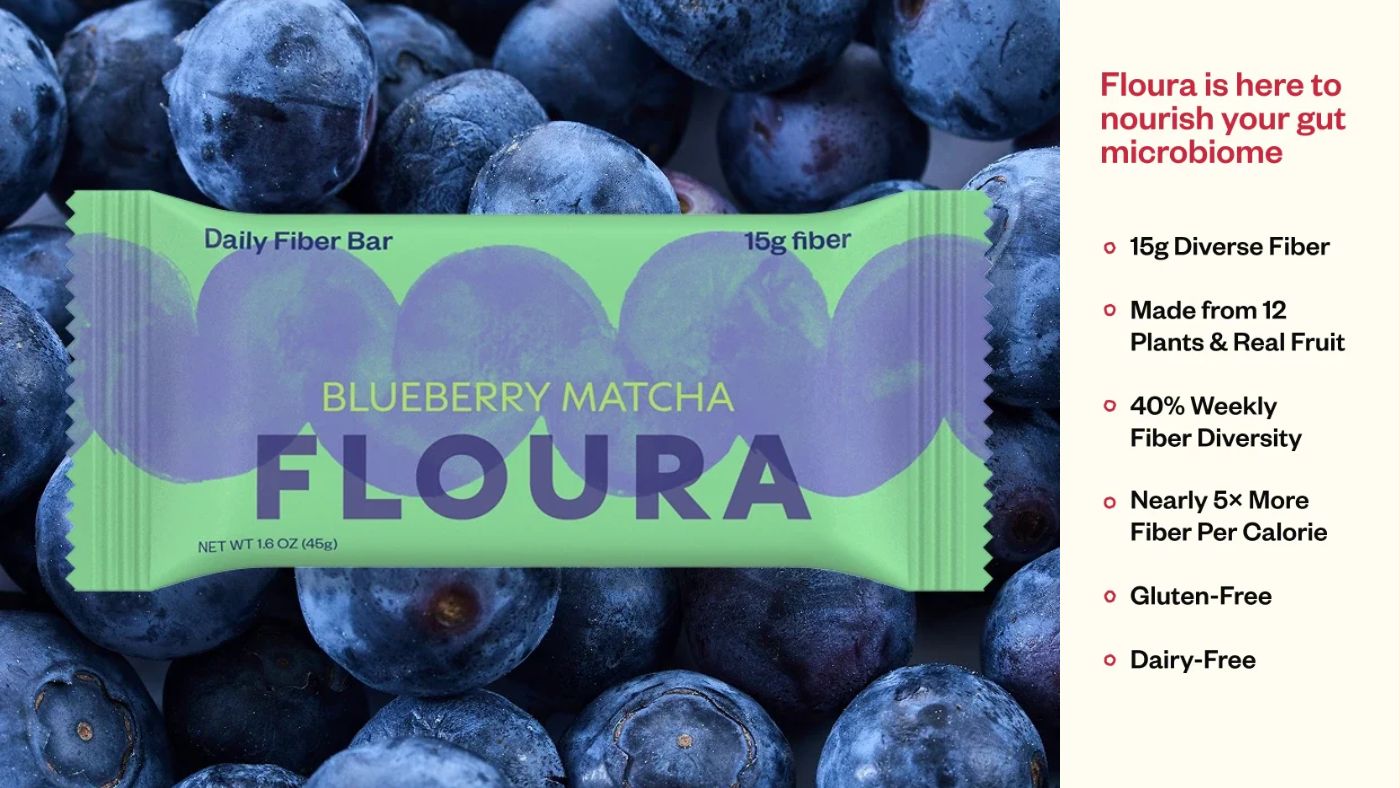
Credit: Floura Bar
Consumer demand for fiber is clearly growing, but general understanding of fiber remains surprisingly limited. Despite health benefits being engraved in our brains, many consumers are still unsure where fiber comes from and which types they should be consuming.
Understanding of fiber sources changes widely. A big misconception of the highest fiber sources exist, with 24% of Americans selecting meat or seafood and 19% selecting dairy, neither of which are significant sources of fiber.
Another category where the general public has a knowledge gap is the amount of fiber they should be consuming. 29% of respondents to IFIC Survey report consuming less than 20 grams of fiber per day, while 37% report that they do not know how much fiber they consume daily. Either they are consuming well under the recommended amount or they are unaware of how much they should be consuming.
Lastly, there are some obstacles that harden Americans to consume the required amount of fiber. Knowing which foods contain fiber is the most common barrier (30%), followed by cost (27%) and taste (26%) of high fiber foods. Additional challenges include cooking or preparation time (24%) and inconvenience (17%).
In conclusion, the clientele has growing demand paired with consumers who are curious, open to experimentation, and eager to learn more about which types of fiber best fit their needs. Brands have a big opportunity to teach their clientele the right sources, while underlining the practicality, the taste and the health benefits.
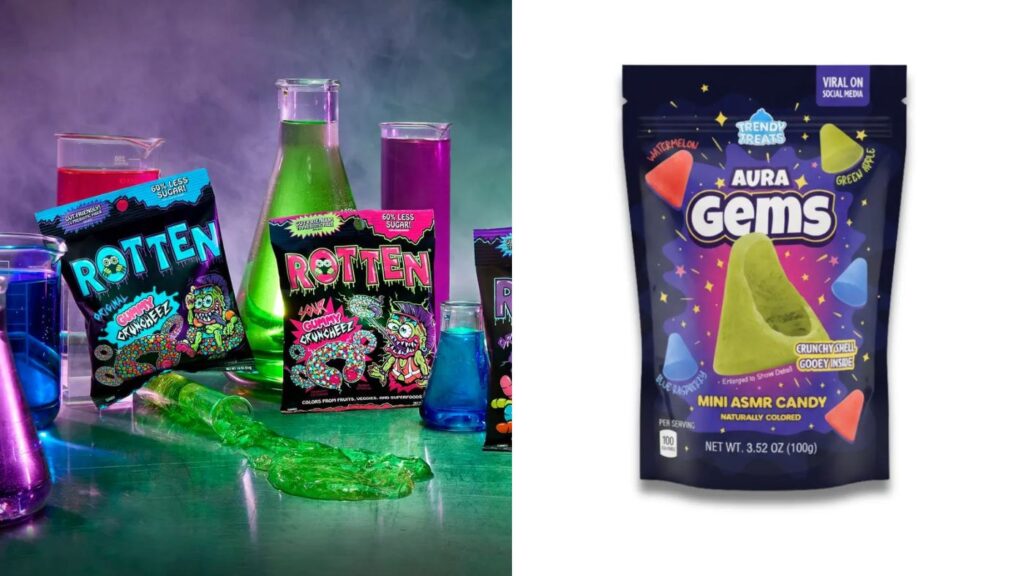
Credits: Rotten, Aura Gems
Everyone’s obsessed with texture. Except the people making the snacks.
Consumers are now talking about texture 3.5x faster than CPG food brands are building for it.
Conversations are up 28% over two years, concentrated in bakery, cookies, chocolate, and sugar sweets. Texture-driven launches are up 8% over the same window.
And though a lot of the conversation is about snealing – snacking in place of meals – there’s another angle: texture. Crunch, chew, creaminess. These used to be a detail on the back of the pack and now they’re a reason to buy. But the supply isn’t there yet, according to Mintel.
59% of 2026 launches made no texture claim at all.
And this is all about the packaging communication. Plenty of products already deliver on texture. Most of them just don’t say so on pack. The story is sitting inside the product and never making it to the shelf.
Crunchy is not the only texture to invest in.
Crunchy is close to half of every sweet snack launched with a texture claim, and it shows up in nearly 1 in 5 sweet snack launches this year. When a texture is everywhere, it stops setting anything apart. Chewy and gooey are the ones gaining momentum fast, mostly in gummy confectionery and molten cookies.
The textures nobody’s building for.
Chewy, soft, melt-in-the-mouth, and gooey sit at 16% combined penetration in launches. Demand for all four is climbing. Soft-baked is the clearest case: consumer interest rose 69% over two years, against 13% growth in launches.
One texture isn’t enough anymore.
Conversations about layered textures are up 26%. People want a fuller sensory experience, not another flavor variant. Pairing a familiar texture with an emerging one is what reads as premium and reinforces indulgence. A lot of recent launches are already multitextural but they don’t communicate on pack. But consumers aren’t waiting for brands to take action. They’re already layering crunchy, creamy, and smooth at home. The behavior is here.
That’s it for this week.
If you’re building something in candy aisle and need the right supplier or co-manufacturer to make it happen, Chapter Foods can help. Just fill out this short form and we’ll contact you shortly.