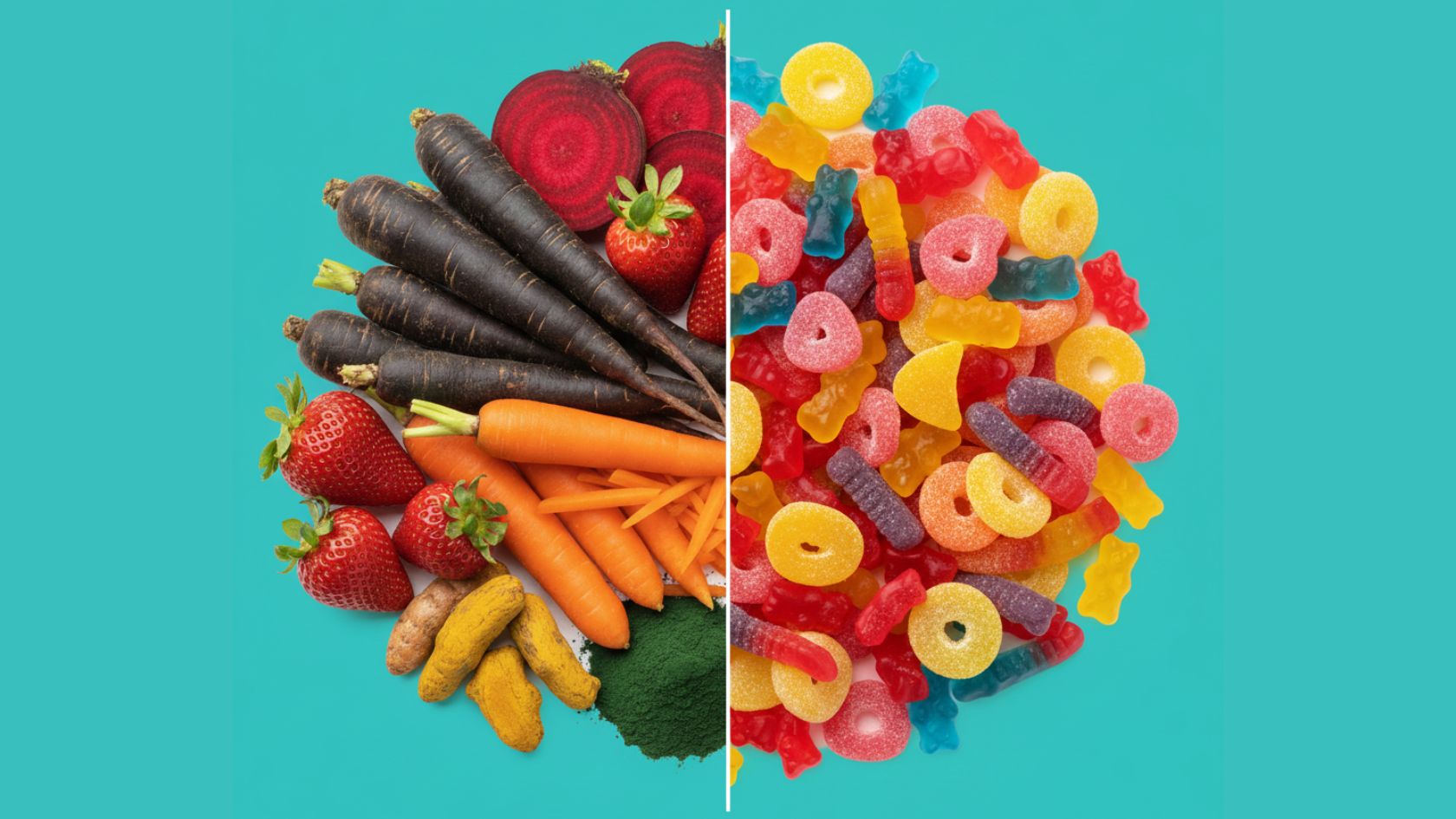
Color sets expectations, carries meaning, and shapes trust—long before the first bite.
“Why do we need to dye our food?” sounds like a strong starting point, until you realize it’s kind of like asking, “Why do fruits and vegetables have color?”
They don’t have color by accident. Color is information: ripeness, freshness, nutrients, even safety. Humans evolved as foragers. Color helped us decide what was ripe and worth eating. For most of our time on Earth, we survived by making fast judgments from sight, smell, and taste. That wiring doesn’t disappear just because the product is in a pouch.
If you want the cleanest example of color as persuasion, look at flowers.
Flowers are the best marketers in the world. They spend resources on sweet scents and vividly colored petals for one reason: to get picked. A flower is basically a weed with an advertising budget, as Rory Sutherland stated.
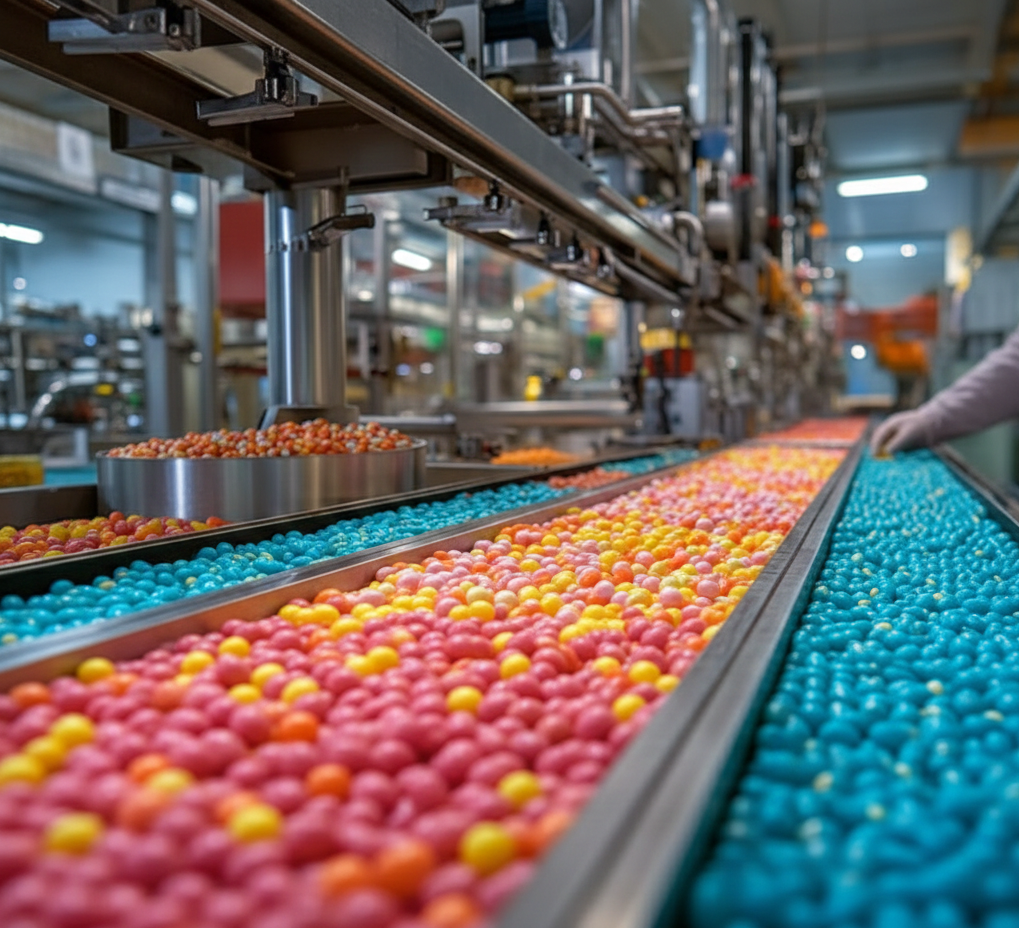
Packaged food plays the same game, just on a shelf. When someone grabs a gummy, they’re not buying it just because they like the strawberry flavor. They buy it because it looks cute and juicy with its pinky red color. And you also know that Lemon = yellow. Grape = purple. These associations are so deeply learned that if you break them, even a correct flavor can feel incomplete.
Anyone who remembers the clear lemon pie trend knows what I mean. It was novel, and it was weird in a fun way. Your brain kept whispering: “Shouldn’t a lemon filling be yellow?”
That’s an expectation violation. In a restaurant, novelty is the point. In packaged food, that same dissonance doesn’t read as “cool.” It reads as “stale,”, “bland,” or “off.” Even if the formulation is perfect, if the color doesn’t match the expectation, consumers feel like something is missing.
Color is also deeply rooted in culture.
Let’s take a look at the holiday season, since we’re in it.
Imagine walking into a bakery in December and not seeing any red-green-white swirls of frosting on muffins. Imagine a confectionery store with no candy canes, nothing that visually tells your brain, it’s almost Christmas. The flavor could be the same. The sugar could be the same. But the moment disappears. Color is as much about memory cues as it is about taste cues.
So yes, color is marketing, but it’s also meaning.
Then what’s the real debate?
The argument isn’t whether food should be colorful. Color is part of how humans understand food. It’s how we predict flavor. It’s how we decide if something feels fresh, ripe, familiar, safe. Taking color away doesn’t make food more honest, it just makes the signal confusing. The real question is simpler: what kind of honesty do we want in that signal?
Artificial dyes make color effortless and identical every time. They’re designed for maximum shelf performance. But they also make the product feel less like food.
Natural colors are harder, sure. If you’ve ever tried to go natural, you already know the frustrating part: the idea is simple, but the execution isn’t. The same “red” can drift depending on pH. Heat can dull it. Light can fade it.
That’s why we’ve spent time building relationships with industry leading natural color manufacturers we trust.
When a brand wants to move off artificial dyes, the hard part isn’t motivation, it’s getting to a version that still looks right in the real world. If you’re working through that transition, we can help you pressure-test options, find a path that fits your product, and avoid the common dead ends.
So use natural colors. Keep the signal familiar. Don’t break the expectation.
That’s it for this week.
If you’re building something in CPG and need the right supplier or co-manufacturer to make it happen, Chapter Foods can help. We match brands, brokers, distributors and retailers with partners who are ready to move.
And if you’re a manufacturer looking to unlock new business or source higher-quality ingredients, we’re your direct line to the right buyers and better suppliers.
Can Koyuncu, Co-Founder & CMO