New York’s public-grocery play
A $60 million plan for city-run supermarkets: great headline, thorny supply chain. We look at who could actually fill the shelves.
Protein 2.0
Shoppers still scan the nutrition panel for grams, but now they’re asking, “What does this protein do for me?” Context might be the new macro.
Podcast of the Week
Hidden Brain asks the question bigger than any food trend: What is your life for, and how do you find meaning? Victor Strecher’s research, and hard-won story, offers some science-backed clues.
Let’s dive in.
Credit: Canva
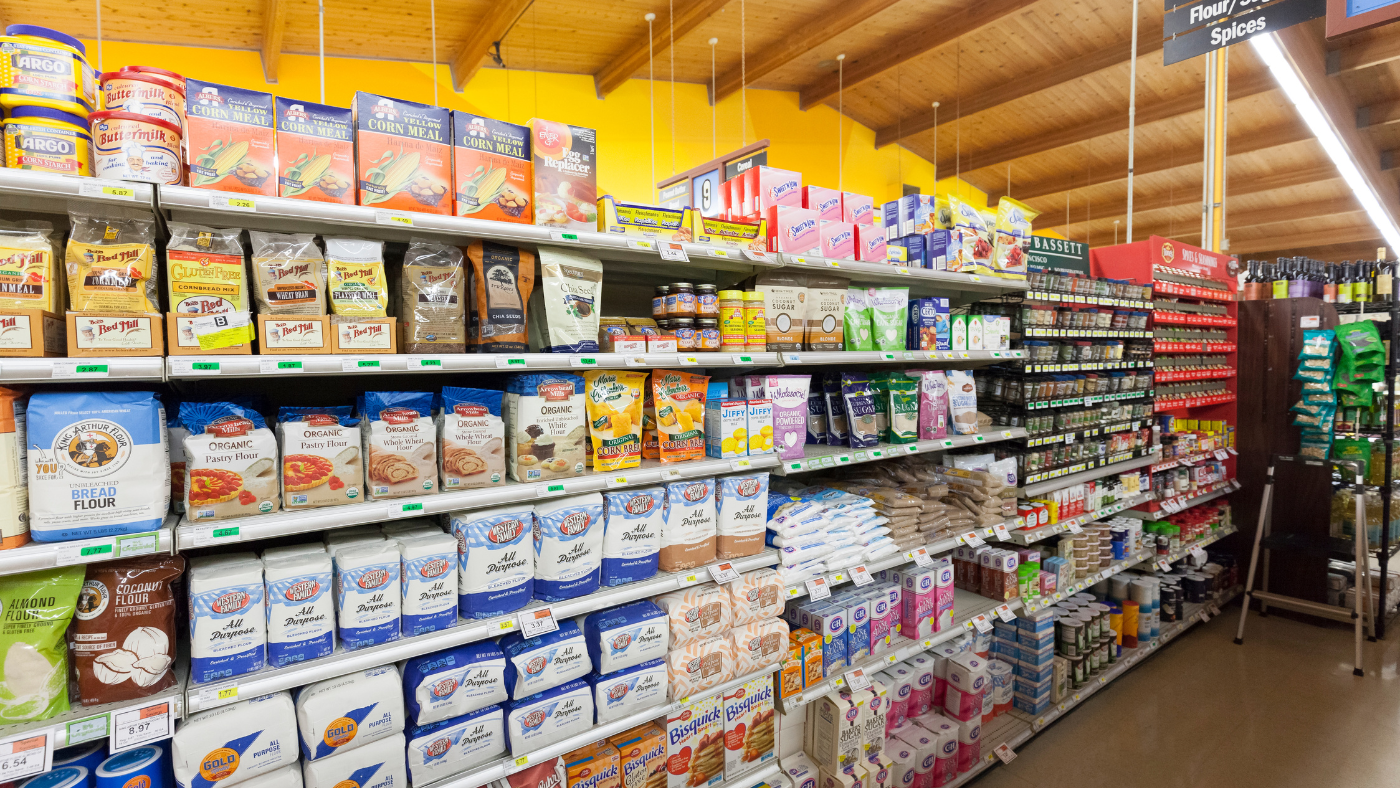
NYC’s Public-Grocery Gamble: Can a $60 Million Pilot Beat High Prices?
Zohran Mamdani wants one city-run supermarket in every borough, backed by a $60 million pot, exempt from rent and property tax, and buying at straight-wholesale. Those numbers track with what he sketched after his primary win and land squarely on the usual “food-desert” map.
City Hall isn’t exactly starting from scratch. Since 1937 the Economic Development Corporation has run six public retail markets–Essex, La Marqueta, Moore Street, Arthur Avenue, Jamaica, and 159th Street–where vendors pay below-market rent in return for affordable produce. They’re community gems, but they’re stalls, not full-line supermarkets, so the city still leans on private grocers. Fifteen years ago the FRESH program sweetened the pot with zoning bonuses and tax breaks; it has opened 30 subsidized supermarkets and has 21 more in the pipeline, yet that entire incentive pool tops out at roughly $3-4 million a year—pennies next to Mamdani’s bid.
Owning the store skips the carrots and goes straight to the stickiest question: where will the food come from? New York State hosts about 3,300 food-manufacturing companies, from Chobani upstate to food and beverage start-ups in Brooklyn, but inside the five boroughs most plants are small, bread-or-pastry operations without aseptic canning lines. If City Hall wants a house brand of canned beans or shelf-stable milk, it may need to look to bigger facilities farther afield.
Local contracting sounds righteous until you price it out. NYC procurement rules still default to the lowest responsive bid for commodity food, and volume expectations routinely shut out smaller processors. The Mayor’s Office of Food Policy has flagged this very bottleneck: small NY-based and MWBE vendors love the idea of city contracts but rarely have the capital or throughput to satisfy them.
Imported goods solve scale overnight, yet every pallet that lands from China or Vietnam invites questions about carbon, freshness, and labor. That tension is baked into other U.S. experiments: Chicago is studying a municipally owned store right now, still undecided on sourcing. Kansas City poured $17 million into a city-backed supermarket and is now bleeding cash and fighting empty shelves. Abroad, Istanbul’s Halk Ekmek runs its own bakeries, milk, snack and bottled-water brands–1.8 million subsidised loaves a day, 3,000 kiosks, yet even with vertical integration the city wrestles with inflation and weekly logistics snarls.
So New York’s real drama will unfold in the bid documents. If the first purchase orders read like a roll-call of co-packers in Long Island City and Hunts Point, City Hall is betting on a hyper-local web of small plants (and swallowing the higher unit price). If the manifests list container ships pasta from Turkey or tomato paste from China, cost has beaten provenance. Either way, the proof won’t appear in press releases; it will be stacked on steel shelves, priced in neon, and carried home in ordinary tote bags. That’s when we’ll know whether this $60 million swing resets the conversation on affordability, or becomes another well-intended plan lost between the loading dock and the endcap.

Credit: Canva
Protein’s Back on Top Again. This Time the Questions are Smarter.
Atkins in the 2000s, paleo and keto in the 2010s, now another protein crest rolling through 2025. Innova’s latest numbers say 49 % of all new functional launches now boast a “source of protein” claim, up 32% year-on-year, while fiber tags hold second place at 32% penetration. History reminds us these waves always break, but each one leaves the waterline a little higher. Bun-less burgers didn’t completely disappear after Atkins, and net-carb math stuck around long after keto peaked.
What feels different this round is how quickly shoppers are drilling past the headline grams. The same Innova data shows consumers hunting for “fast-digesting,” “more bio-available,” even “muscle-sparing” call-outs, evidence that the macro alone no longer closes the sale. Energy, weight-management, immune support: people want the why, not just the how much.
Fiber is catching the updraft. Gut-health seekers now scan packs for resistant starch and inulin almost as eagerly as they count protein units. That tandem push explains why 58% of consumers say they’re actively adding protein to their diets and 48% say the same for fiber. Call it the protein–fiber handshake: one feeds the muscles, the other feeds the microbiome, and together they frame a broader wellness story than either nutrient managed alone in previous cycles.
So yes, protein mania is cyclical. But every spin of the wheel raises the consumer’s baseline knowledge and expectations. Grams still headline the pack, yet context now sets the price. Brands that answer which protein, whose fiber, and what outcome will ride this crest longest. The rest will wash out with the next fad diet, same as always.
Podcast of the Week: “You 2.0 – What Is Your Life For?” by Hidden Brain
Shankar Vedantam sits down with University of Michigan researcher Victor Strecher for a conversation that starts with the question every 17-year-old writes in a college essay: “What should I do with my life?” and then refuses to stay shallow. Strecher’s story is equal parts heartbreak (his daughter Julia’s two heart transplants) and hard science (purpose, it turns out, rewires your amygdala and strengthens your immune system). The episode lands on a truth most self-help books skip: finding meaning is a daily test of what you say yes to, and what you finally let go.
That’s it for this week.
If you’re building something in CPG and need the right supplier or co-manufacturer to make it happen, Chapter Foods can help. We match brands, brokers, distributors and retailers with partners who are ready to move.
And if you’re a manufacturer looking to unlock new business or source higher-quality ingredients, we’re your direct line to the right buyers and better suppliers.
Can Koyuncu, Co-Founder & CMO