This week, we’re talking shelf-level innovation and seasonal turbulence.
From Tokyo’s agile retail scene–where convenience stores practically rewrite their product lineups weekly–to U.S. grocery aisles, filled with groundbreaking ideas yet stuck in outdated shelf setups, something feels off balance. Both markets have strengths the other desperately needs.
And as we approach a holiday season clouded by supply chain chaos and tariff uncertainty, flexibility and foresight have never been more critical.
And in our Podcast of the Week, we unpack exactly how emojis became legally binding language.
Let’s dive in.
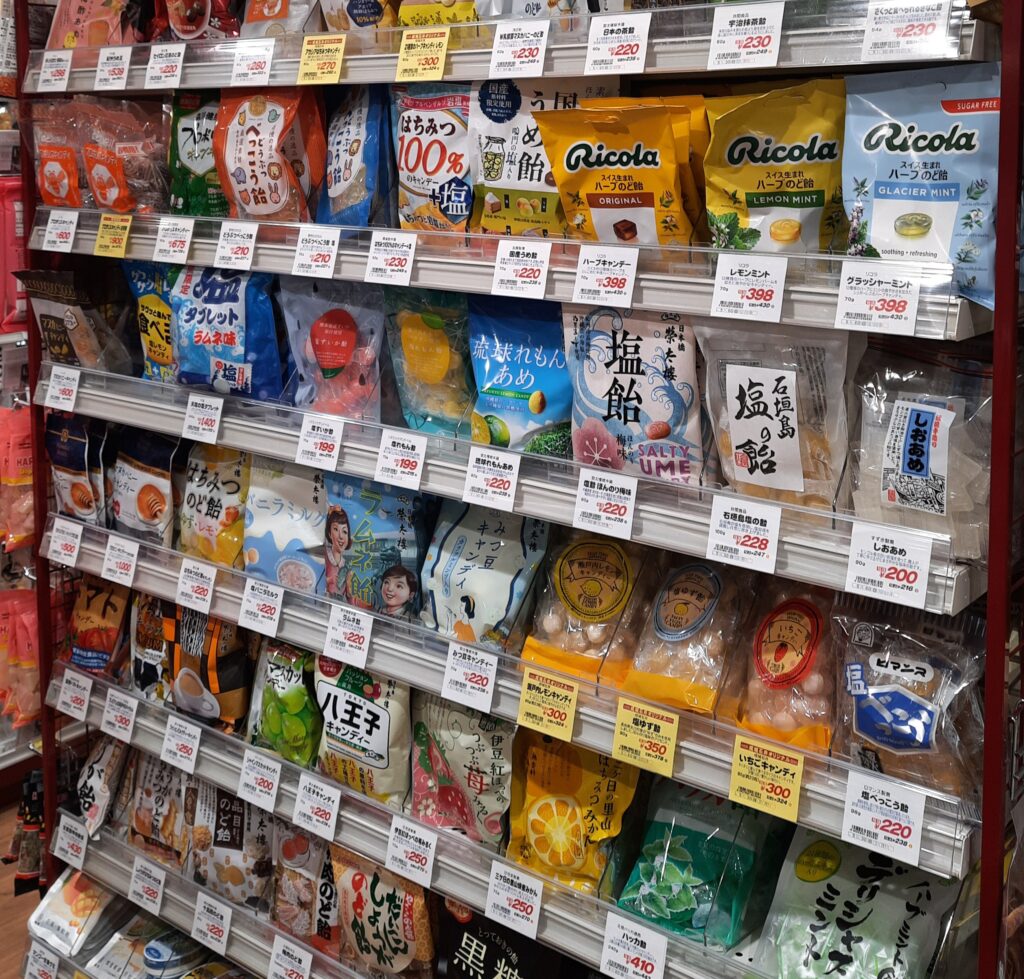
Hard Candy is a big thing in Japan (Seijo Ishii supermarket).
The Aftermath: Innovation at Shelf Level (U.S. vs. Japan)
Something struck me in Tokyo that I’ve been thinking about ever since: when it comes to innovation, the U.S. and Japan play very different games.
In the States, innovation is often defined by the products themselves. Walk into almost any retailer and you’ll see an explosion of new product ideas. Small brands and entrepreneurs continuously flood the market, betting on niche trends and wellness obsessions.
It’s a fiercely competitive ecosystem: many fail quickly, but the survivors often change entire categories.
But there’s a twist: despite all this energy in product development, American physical retail spaces are surprisingly slow to catch on. Stores still feel mostly static: same aisles, same layouts, and generally, the same merchandising style that probably hasn’t changed since the 2000s or earlier.
It often leaves emerging brands stuck in no-man’s-land—unsure if their product belongs next to soda, supplements, or somewhere entirely new. The struggle of modern sodas and non-alcoholic beverages in figuring out their shelf space is a perfect example (Antonietta Galasso would agree I’m sure).
Now jump to Japan, and things flip. Over there, the innovation isn’t so much about what’s on the shelves as how those shelves (and entire stores) are managed.
Japan’s retail is all about agility, experience, and relentless novelty. Convenience stores (konbini), upscale supermarkets like Tokyu Store, and specialty spots like Seijo Ishii feel endlessly dynamic.
Products rotate weekly, seasonal flavors burst in and out of existence, and even basic items get frequent refreshes to keep customers engaged. Retail innovation in Japan is precise, responsive, and addictive.
But there’s a catch here too. Japanese stores might innovate relentlessly, but the actual product innovation is often incremental rather than transformative.
Big CPG firms dominate shelves. Innovation typically means another Suntory beer flavor or another Morinaga In protein bar rather than entirely new categories or healthier, functional breakthroughs. The result? The “better-for-you” movement we see thriving in the U.S. feels muted in Japan.
Yes, there are healthier options, but they’re mostly slight tweaks from trusted brands, still packing plenty of sugar (thankfully, no artificial colors).
What the U.S. could learn from Japan is agility at the shelf–constant, thoughtful merchandising that matches the dynamism of product innovation. (Though Pod actually shifting things.)
Conversely, Japan could benefit from the fearless product innovation and startup driven disruption that has redefined entire categories.
My dream scenario? Bring a few Japanese retail execs to the States and watch their reaction when they realize how much shelf-level innovation they’re missing.
Or even simpler, export some cutting-edge American products to Japan, set up a carefully curated retail concept, and watch it fly.
Holiday Headwinds
As the holidays approach, the retail industry finds itself sailing into stormy seas, fueled by uncertainty around tariffs and supply chain. Recent developments suggest that retailers and manufacturers alike could face unprecedented challenges this holiday season, prompting businesses to rethink their strategies from production schedules to promotional campaigns.
Brands and suppliers are wrestling with the impact of elevated tariffs. As the clock ticks toward peak holiday inventory arrivals, many industry leaders are stuck in a holding pattern, unsure whether tariffs will ease or intensify, and hesitant to commit large capital to importing products at potentially inflated costs.
Historically, the seasonal goods markets rely heavily on early production and shipping cycles, typically kicking off by early summer. This year, however, many production lines have stalled, with companies cautiously delaying orders, hoping for a more favorable tariff environment. Yet even an immediate resolution might not fully mend the cracks already formed in the supply chains. The delays accumulated now will ripple outward, potentially resulting in inventory shortages or price hikes by November and December.
These shifts pose critical strategic questions for retailers: Should they raise prices significantly to account for tariffs, potentially dampening consumer demand? Or should they absorb costs and risk profitability? Both scenarios present significant risks, particularly for small- to mid-sized businesses, many of whom operate with thinner margins.
Moreover, marketing and promotional activities, traditionally a key lever during high-volume periods like Prime Day and Black Friday, are under scrutiny. Brands must decide whether to dial back promotions to conserve limited inventory or ramp them up in a bet to capture market share, despite shrinking margins.
As a result, executives are re-evaluating their holiday strategies. Many businesses are now investing considerable time in contingency planning–adjusting SKU assortments, rethinking inventory placements, and creatively packaging products to maintain appeal despite increased prices.
Ultimately, this upcoming holiday season will serve as a pivotal test for retailers’ resilience and adaptability. Those who navigate these turbulent waters effectively will not only preserve consumer trust but also emerge stronger, with leaner, more flexible supply chains ready to handle whatever comes next.
Podcast of the Week:
I wasn’t sure how to introduce this podcast episode, but here’s the thing: be careful which emoji you use in business.
A Canadian farmer once responded to a grain contract with a simple thumbs up. He meant “got it.” The buyer took it as “deal.” No grain showed up. The buyer sued for $62,000. And won.
The judge ruled that the emoji counted as a digital signature.
So yeah, courts are starting to treat emojis like actual language. Because they are.
Next time you’re closing something over text, maybe just use words.
And please, if you are working with a GenZ, do not send them thumbs up, because it’s passive aggressive. I mean it, believe me. I’m a GenZ.
Is your business impacted by the latest food dye regulations or tariffs—and thinking about your next supply chain move?
Chapter Foods can help, fast:
We’ve built a ready-to-go network of 20+ vetted candy, gummy and chocolate manufacturers from the U.S., Turkey, and APAC countries—each already geared up for clean-label production at scale. No artificial dyes, no synthetic flavors, no matchmaking headaches–just real partners who keep your products moving smoothly from concept to shelf.
We’re bringing this network to the Sweets & Snacks Expo in Indianapolis next week. If you’re attending, we’d love to meet you, explore opportunities and help you simplify your next move.
See you at the show!
Can Koyuncu, Co-Founder & CMO