This week’s trip to ISM Japan and Anuga Select was meant to be a sourcing mission. We came to find new manufacturing partners across APAC for gummies, chocolates, teas, and snacks. What we left with was a bag full of strange, brilliant samples and a deep dive into where candy might be headed next.
Let’s start with a few quick takeaways:
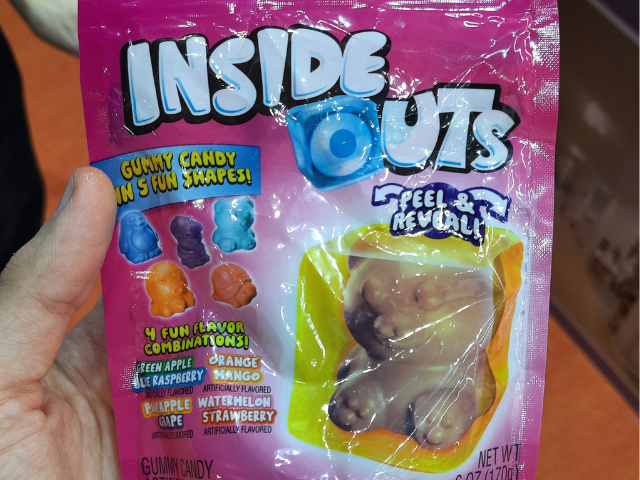
Peelable Gummies Are Everywhere Now: What started with Amos is now turning into a trend manufacturers want in on. From giant ring-shaped peelables to peel-and-reveal character gummies, it was a bit of a flex, some booths even had “5D gummies” (yes, really). We partnered with two Chinese manufacturers for these, so if you’re a buyer or brand looking to explore peelables, hit us up (I know, the tariffs)
Freeze-Dried Candy? Not in Japan: Surprisingly underrepresented. At ISM Cologne earlier this year, it was on nearly every table. But here? I saw it in only one booth.
Pro & Prebiotic Candies: Cibo Vita’s Yoggies are already leading the space, and they showed up here in style. But they weren’t alone: there were probiotic + protein-packed chocolate bites from Thailand, chocolate-covered prebiotic gummies from China, and GABA+prebiotic infused jellies scattered across booths.
Low Sugar Chocolate Snacks: I counted at least five different manufacturers offering low or no sugar chocolate snacks–mostly nuts and fruits, dipped and branded with a clean label wink. Not the most groundbreaking stuff, but the volume speaks volumes. Especially considering how rare it is to find low sugar snacks in Japanese retail right now.
Yes, There Were Alcoholic Gummies: A Dutch company called Smith & Sinclair brought their “Eat Your Drink” line: infused cocktail gummies with 5% ABV. Whiskey sour, mojito, negroni… you name it. They weren’t exactly chewy, but they did feel like a category bending moment.
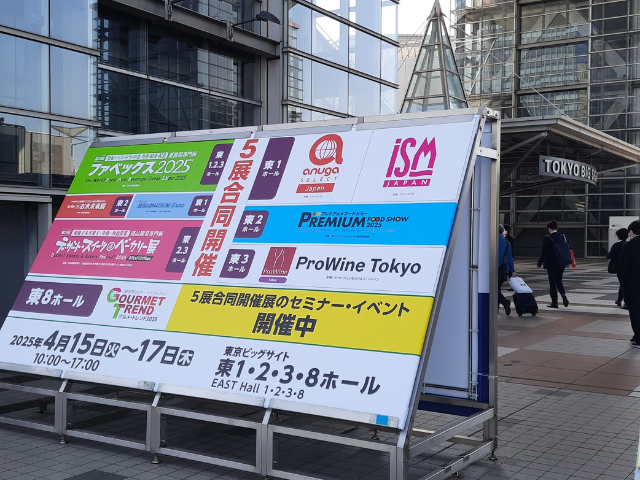
ISM Japan, Day 1: Peelable Worlds and the Shape of Gummy to Come
Tokyo Big Sight isn’t exactly close. Forty-five minutes out, 1000 yen round trip. Not the most scenic ride, but definitely the most expensive one of the trip. By now, I’d gotten used to the long, deliberate flow of Tokyo’s train system: everyone headed somewhere, no one rushing.
I got there early. That is why the coffee chain Dotour welcomed me like it always does: warm light, stiff chairs, the smell of burnt drip coffee mingling with steamed buns. I ordered a Bolognese sandwich, a red bean bun, and what I thought was a filter coffee. It was a latte. Back to the counter, Google Translate in hand. A short, silent exchange, a small bow, and the right cup was finally in mine.
By 9 am, I was at the venue. By the time doors were open at 10 am, I walked in wearing a sharp, white shirt and jeans.
The first booth was a behemoth from China. Their catalog was full of fever dreams: gummies shaped like severed feet, peelable gummies, marshmallows to resemble fried chicken and coated in panko. There were dual-collagen protein gummies, mushroom-shaped foam chews, konjac jellies, and chili gummy worms that shouldn’t have worked, but did. Somewhere between chaos and genius, they’d built a playground. I took their card.
Down the aisle, another Chinese brand waved me over. We talked for 15 minutes. Their products weren’t for me, but their translator device was fascinating–a handheld live interpreter that looked like a walkie-talkie from Blade Runner. Cleaner than the Google translate. These small moments stick.
A South Korean booth followed. Gluten-free flours, pancake and tempura mixes. Their baked goods were legit. I thought of our gluten-free manufacturer partners and left my card. In that exact moment, the founder arrived and handed me their new product—Synbiotics—a fermented rice tablet with pre- and probiotics. We both took one on the spot. He gifted me a box. Functional (candy?) diplomacy.
At the next booth, I ran into more tariff anxiety than product lust. The lineup was beautiful—freeze-dried strawberry nougats, hard candy polished like stones—but all I could think about was how they’d survive Trump’s next policy pivot.
Then came a Japanese heritage booth. Throat candies, tomato flavored hard candies, and licensed characters—Hello Kitty, Snoopy, the usual suspects. We spoke through Google Translate, then exchanged business cards the traditional way: two hands, full eye contact, slight bow. Felt like a ritual. A moment of grace.
I stopped by a Taiwanese booth I’d flagged via ISM Japan’s app earlier. They had yogurt-coated nut snacks packed with beta glucan and probiotics. Couldn’t taste them (nut allergy) but took a few for my co-founder Gülşah (later she said they were amazing). They were also strong in baked squid. Loved the vibe, loved the team. One of my top picks.
Next, a Chinese booth that surprised me. Chocolate-covered gummies loaded with prebiotics. Muscat grape flavored was the best. They even had Dubai-style chocolate and I guess they were the only Chinese team that had this product. The team was friendly, sharp, and camera-ready. Felt like a future partner.
Then: Smith & Sinclair, from the Netherlands. “Eat your drink.” Cocktail gummies with 5% ABV. Whiskey sour, margarita, mojito, and some sober versions like matcha-yuzu. I stayed for the chat. The founder had charm.
Ninth stop was the first to hand me a full sample kit. Another Chinese brand and the first to show me 5D gummies. What’s the fifth D? No idea. But the race is on. 3D was basic, 4D was peelable. Now it’s dimensions. Someone’s going to claim 6D soon. The seasonal SKUs were gorgeous at this booth.
When I asked about the tariffs, the sales director said they weren’t worried—China’s domestic market was big enough to lean on. Emre from Cibo Vita disagreed the next day. “They don’t have the purchasing power,” he said flatly. A week later, Trump met with Walmart execs and announced plans to ease tariffs. Emre was right.
By 1 p.m., I was starving. I grabbed a tonkatsu curry from the upstairs food court. Not bad, but not worth a second round here. Called Gülşah, answered a few emails, picked up a Tully’s iced coffee from FamilyMart, and headed back in.
A German snack manufacturer was next. First time I pitched our business model to a European team. No confusion, no pushback. They got it instantly. I’d seen some of their products in Turkish premium stores before. Their kids’ SKU made me think of Once Upon a Farm. Definitely some runway here.
The 2:30 pm meeting came up early. I spotted the team at their booth, saw they were available, and figured, why wait? I introduced myself and met Steven first. We started with the usual: the U.S. gummy landscape, upcoming regulations, state-by-state dye bans. Then somehow drifted into the confectionery and retail landscape in Turkey. The kind of conversation that unbuttons itself as it goes: casual, funny, surprisingly rich. When it was time to shift into the actual meeting, we didn’t miss a beat. The handoff to his colleague was seamless. Everything that followed was sharp, focused, and full of real traction.
Before wrapping the day, I tracked down a mastic gum manufacturer I’d been looking for. Lucky break—they were here. We hit it off fast. The export manager was just a year older than me. We talked gum SKUs, gummy SKUs, Tokyo, tariffs. He mentioned he had a headache, so I walked him to FamilyMart and bought the last three Pocari Sweats on the shelf. Hydration diplomacy. We ended up chatting on the balcony for a while before splitting ways. A good meeting. Real human. One I’ll remember.
Anuga Select, Day 2-3: Savory Chaos, Matcha Cola
The second day started with squeeze pouches: soups, broths, familiar names like Youki lined up in clean rows. A few years ago, this would’ve felt cutting-edge. Today, it felt like a warm-up act.
Next: hot sauce in tubes, the kind that looks like fancy toothpaste. Good design, solid flavors, but nothing that made me pause. That came a few steps later:
Nature’s Charm had a sweetened condensed oat milk that stopped me cold. First time I’d seen one. It felt like it was made just for me (dairy breaks me out, and nuts even worse) Bonus: they also had an oat-based evaporated milk.
I kept walking and met a salt producer. They told me their salt was mined in a region with “very special energy.” Not sure what that meant, but I liked their packaging. When I asked what made the “premium” version premium, no one had an answer—they just handed me a bag to try and smiled (they are good as finishing salts).
A few booths down, I found myself staring at natto, this one made from black beans. I hesitated, as one does with natto if it’s the first time. But I took a bite. Surprisingly mild. Didn’t even need rice because it was delicious by itself. It stayed with me, in a good way.
Then came the wasabi squeeze packs. Again, no samples. They were also pushing garlic jelly dressings, which I saw pop up across multiple booths.
”Apparently garlic is having a texture moment”, I would say if we were at a trade show in the U.S. but here in Japan, jelly is a regular thing for any category you can think of. Right next to it, mustard in Kewpie bottles. Bright, vinegary, and apparently, everywhere. Japan is wild about mustard. Something I hadn’t expected to learn that day.
A few steps later, I landed at a booth serving matcha noodles. The sales guy handed me a small cup of dashi-soaked strands, umami-rich, perfectly savory. I could tell the matcha wasn’t just a gimmick; it had that slight dashi backbone already, so folding it into a broth like this made perfect sense. Balanced, earthy, fishy, quietly brilliant.
Now it was time to get serious about matcha. I veered off into the Premium Food Show section, the zone I’d been eyeing since day one. To be clear, this entire floor was a patchwork of trade shows stitched together. Anuga, ISM, Premium Food Show, and two more, all happening simultaneously, without real borders. No dividers, no signage, just changes in carpet color. One minute you’re talking candy, the next you’re staring at fermented miso protein without knowing you crossed a line. It was organized chaos, held together by floor design and pure faith.
The first matcha supplier I met had been busy. They’d already collaborated on matcha-infused popcorn, chocolate, even cotton candy. Their branding was sharp, their presence confident. You could tell they weren’t new to this.
Then came the knockout. Another matcha booth, but their flagship product wasn’t tea. It was Matcha Kraft Cola. Not an RTD, but a syrup: thick, concentrated, made to be mixed. I asked if I could taste it. The older gentleman behind the booth smiled like I’d just asked the right question. He poured a shot, added sparkling water, and handed it over like it was contraband.
First sip: I paused. Then smiled. Then asked what the hell was in it. Cardamom, black pepper, ginger, orange peel…layered, complex, and finally the matcha, folding through it all like a green velvet curtain. It was bright and spiced, bitter and sweet, aromatic in a way that felt almost too smart for a soda. He told me Coca-Cola Japan R&D team had tasted it and loved it. I didn’t doubt him.
Then he poured me another sample: Ichi-Koji Mixer–a fermented blend of matcha and koji. Funky, wild, alive in all the right ways. It had that deep, layered complexity that makes you stop mid-sip. They didn’t have enough to hand out samples, so I left empty-handed but not unchanged. There was a quiet sense of awe hanging in the air, like I’d just tasted something from an unknown world.
And just when I thought I’d seen it all, I ran into another matcha booth—but this time the packaging was the headline. Powdered tea stored in glass jars shaped like… let’s just say, modern sculpture. Several brands were doing it, apparently part of a silent packaging trend no one asked for. The tea itself? Solid. Instant matcha and hojicha with no bitterness. I took their info and moved on.
Then came RTD teas in 1-liter cartons: apple, Earl Grey, Darjeeling, and one just called “Straight Tea.” All solid. I’d drink any of them over what you find on most U.S. shelves.
Then came the snacks. Fleur Blanc biscuits in matcha, melon, and strawberry—delicate, quietly sweet, beautifully boxed like a gift you give yourself. The kind of packaging you want to keep long after the cookies are gone. I saw this format everywhere in Japan. Refined, compact, designed to be noticed on shelves and in handbags alike.
A honey brand caught my eye next. One of their jars took me straight back to a honey tasting I did in Izmir back in 2017. I still remember this one wildflower honey that somehow tasted like Turkish coffee. I think about that sometimes. How bees can pull flavors from flowers we’ll never know exist.
And then finally, Oatside. The oat milk brand Instagram had been hurling at me for months. I gave it a sip and yeah, it lived up. Creamy, slightly nutty, clean finish. Just… good. One of the best on the market, easily. I’d buy it.
One more booth before I moved on: cocktail powders, instant teas, functional blends. The sales rep told me they were the manufacturer, not just a brand. That’s when I pitched Chapter. They leaned in. Some of the flavors were clearly artificial, but the colors were clean, and the formulations had promise. I tried their Relax Lavender Tea, 100mg of GABA per serving. I took a sip.
Closing time was approaching, but I still had a few aisles left in me. I passed by a garbanzo bean-based breakfast cereal and a lineup of low-sugar jams. Neither was groundbreaking, but both were clean, thoughtful, well-made. Then I spotted a sauce labeled Yellow Leek Korean Pancake Sauce. The kind of thing you try out of curiosity, not expectation. It ended up being oddly addictive—savory, a little tangy, totally usable.
Just around the corner, a rice cracker company pulled me in with packaging so earnest it bordered on parody. Their kid-friendly line was literally called Japon. I laughed out loud, snapped a few photos (Japon means Japanese in Turkish). When the owner showed up, I asked a few questions—and he lit up like he’d been waiting all day for someone to care. He walked me through every detail of the ingredients and process with quiet pride.
A few steps away, Beyond Meat had a new patty on display. I gave it a try. The texture leaned more sausage than burger, but it was juicy, flavorful, and better than most of their earlier stuff.
Then I hit Shonai Special, a plant-based bar brand with elegant packaging and flavors like Yuzu & Vanilla and Yuzu & Fig. All contained nuts, so I passed, but took a few for Gülşah. What stood out? Their base wasn’t date to my surprise, it was persimmon. Very Japanese. I saw them at Natural Lawson a few days later. Nice full-circle moment.
One of my last stops was a spice vendor with a killer shirt and not a word of English. I instinctively pulled out Google Lens, he waved it off. “No need,” he said, and started walking me through every ingredient himself. The guy had charisma. His vinegar-cured apricot? Just okay. But his curry roux packaging? Absolutely gorgeous: hand-drawn, vibrant, the kind of design that makes you want to buy it just to admire it.
Next to him was an elderly couple selling rice porridge: octopus, soy mince, chicken, even a kelp version made for babies. The packaging was all clear plastic, kind of clinical, not exactly inviting. But they were so warm, so proud of what they’d made, that I ended up staying for a while for the chat.
Final booth: Ranman Organic. Sake, newly rebranded. I liked version C, the one with the green background. The founder preferred B—more sakura. I told her to take photos of both on-shelf and test visual impact and she loved the idea. Gave me a few extra pours. It was better than the sake I had in the Izakaya restaurant Kudan on my first night.
Perfect end.
Final Notes
I came to Tokyo looking for manufacturers and suppliers. I left thinking about structure. Not just of gummies or gummies pretending to be drinks–but of categories, habits, formats. Of how flavor behaves when it’s fermented, or layered, or peeled like fruit. Of how something as small as a jar shape, or a missing sample, or a single sip of matcha cola can shift your sense of what a product even is.
ISM Japan, Anuga Select, Premium Food Show and others didn’t scream for attention. They didn’t have to. Innovation here is quiet, sometimes awkward or simply brilliant. You just have to be patient enough to spot it. It’s in the packaging. The textures. The unexpected decisions. The products that don’t quite make sense yet but will.
That’s it for this week.
If you’re thinking about how to move smarter in this new terrain, or just want to bounce around an idea, my inbox and dm is open.
And if you’re looking for the right co-manufacturer or supplier to help you build what’s next, Chapter Foods is here. We connect brands and retailers with the right partners (now some from APAC region): fast, reliable, and ready.
Until next time, stay focused and keep moving
Can Koyuncu, Co-Founder & CMO