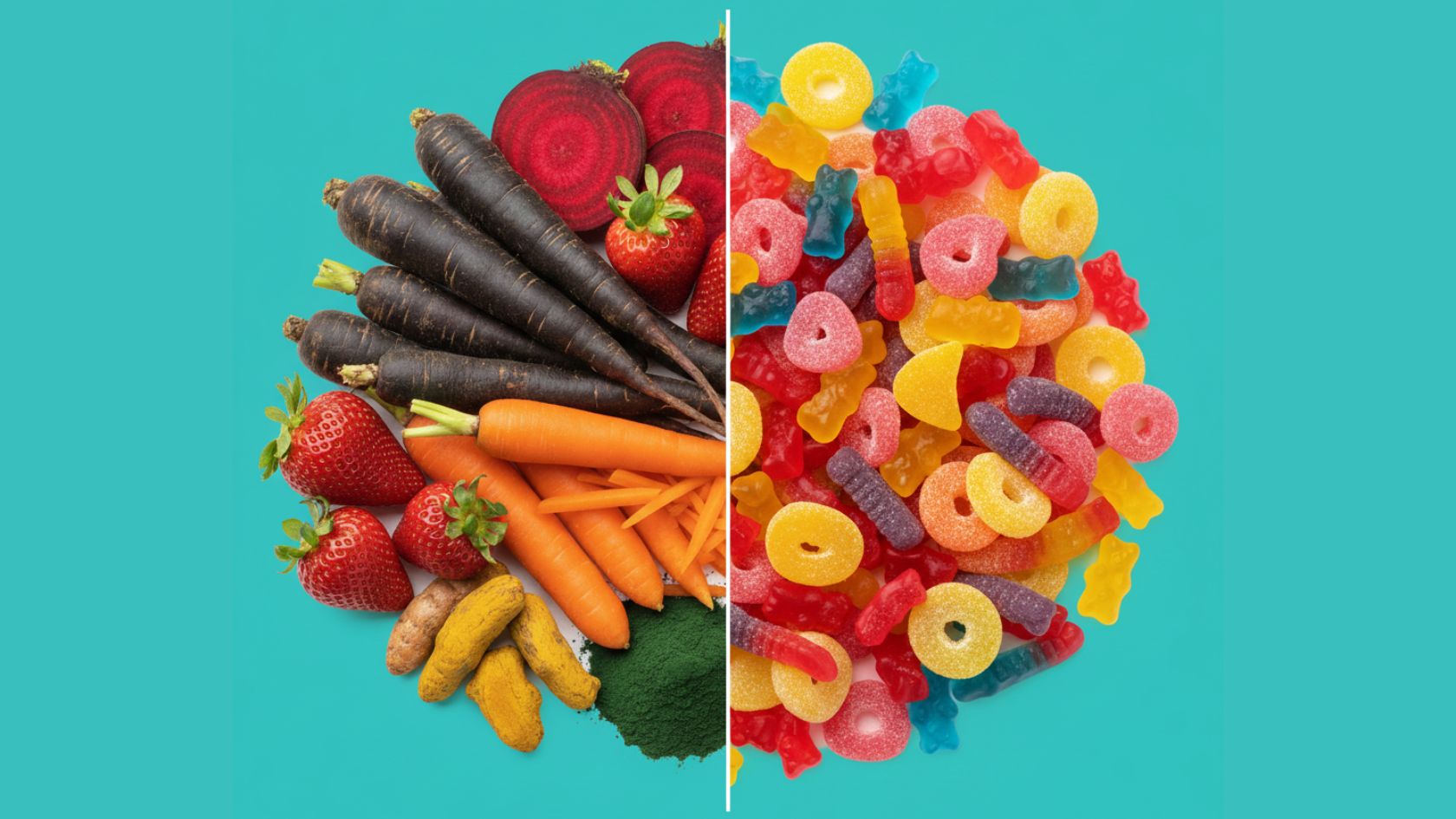
West Virginia was supposed to be the first domino.
Last year, the state passed a landmark law set to ban seven artificial dyes in food and beverages by January 1, 2028. It was the tip of the spear for a national movement. This week, however, a federal court hit pause.
A judge has temporarily blocked the statewide ban, siding with manufacturers who argued the law is unconstitutionally vague.
This isn’t just a story about food coloring. Rather, it is a roadmap for how the next wave of “ingredient restrictions” will be fought in courtrooms, statehouses, and on retail shelves.
The Legal Friction: Why the Pause?
West Virginia’s House Bill 2354 attempted to ban Red 3, Red 40, Yellow 5, Yellow 6, Blue 1, Blue 2, and Green 3 by folding them into an existing food safety rule against “poisonous or injurious” substances.
The court’s injunction hinged on a fundamental “due process” problem:
- Lack of Definition: The law doesn’t define “poisonous or injurious” in a way that businesses can actually measure or follow.
- Arbitrary Enforcement: Without clear criteria for how substances are added to this list, the court ruled the statute could be enforced arbitrarily.
- The FDA Conflict: Because these dyes remain FDA-approved, the judge noted that a vague state-level ban creates “regulatory chaos” for national brands.
Note: This ruling does not affect the restrictions on school meals that took effect in August 2025. Those remain in place.
The Bigger Picture: Market Reality vs. Legal Rulings
While Governor Patrick Morrisey called the decision “wrongly decided” and vowed to fight on, the real story lies in the shifting floor of consumer expectations.
West Virginia’s law was the template for dozens of similar bills currently floating through other states, fueled by the “Make America Healthy Again” (MAHA) movement. But even if every one of these laws is tied up in court for years, the market has already moved.
Retailers are responding to the “Clean Label” demand regardless of what judges say. Walmart recently reported:
- 62% of shoppers want more transparency about ingredients.
- 54% of shoppers actively review ingredient decks before purchasing.
In the modern grocery aisle, retailer standards are becoming the de facto regulation. If a major retailer decides they don’t want these dyes on their shelves to satisfy their customers, “FDA Approved” won’t save your shelf placement.
4 Strategic Realities
If you manufacture or distribute food products, do not let this injunction lull you into a false sense of security.
- An “Injunction” is not a “Resolution”: This is a preliminary pause. The litigation continues, and the risk remains on the horizon.
- The Patchwork Problem is Accelerating: Even if West Virginia loses, California, New York, and Illinois are drafting their own versions. Brands are staring at a future where requirements diverge by state, channel, and retailer.
- “FDA-Approved” is no longer a shield: Legally, it helps in court. Commercially, it is losing its’ weight. A growing segment of the mass market no longer asks if an ingredient is allowed; they ask if it’s necessary.
- Reformulation is a “When,” not an “If”: The most successful brands are scenario-planning now. Waiting for a final court ruling before starting R&D is a recipe for supply chain panic and lost market share.
How We Can Help
Transitioning away from synthetic dyes is a technical challenge involving taste stability, color consistency, and cost-scaling. We specialize in the “how” of reformulation—helping brands navigate these transitions without losing their signature look or margin.
What category are you in? Tell us your industry, and we’ll send over our latest data on natural color alternatives specific to your product line.
That’s it for this week.
If you’re building something in CPG and need the right supplier or co-manufacturer to make it happen, Chapter Foods can help. We match brands, brokers, distributors and retailers with partners who are ready to move.
And if you’re a manufacturer looking to unlock new business or source higher-quality ingredients, we’re your direct line to the right buyers and better suppliers.
Can Koyuncu, Co-Founder & CMO